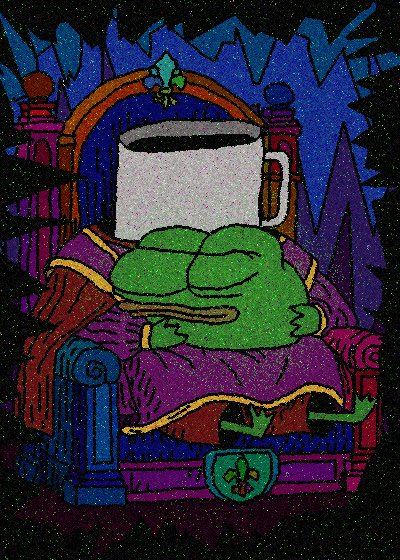

RENT = FEE.
We're not going to call it a fee. A fee disappears into a platform. Rent goes somewhere — it pays for the house. So that's what we call it: every trade on HOMEPAD pays rent, and rent goes home.
Every launch on HOMEPAD is a tenant moving into the building. Every trade they generate pays rent. That rent doesn't vanish into "platform revenue" — it flows straight back into $HOME: bought back from the market, deepened into liquidity, and shared with the creators who keep the building full.
Everyone can launch. Every launch pays rent. Rent goes home.
the loop.
This is the part that compounds. Read it once as a story, then look at the wheel.

More liquidity means less slippage on big trades, which makes $HOME steadier to hold, which brings in the next wave of builders — who launch, and pay rent, and the wheel turns again.
where the rent goes.
$HOME Buyback
Rent buys $HOME directly off the market. The more HOMEPAD is used, the more consistent buy pressure $HOME sees.
HOME/ETH Liquidity
A share of the bought-back $HOME, paired with ETH, gets added as protocol-owned liquidity — deepening the pool HOMEPAD itself owns, permanently.
Creator Incentives
On top of each launch's own fee-share, a slice of protocol-wide rent funds incentives for the creators actually filling the building.
Treasury / Ops
Keeps the lights on — infrastructure, tooling, the unglamorous costs of running a protocol.
This is the plan we're building toward — not live yet. Today's contracts route the platform's share of trade fees to a single treasury wallet; this four-way rent split is the next iteration, once HOMEPAD is past testing.